
Heat pumps for above-ground pools

Filter

Product Title

Regular price
$19.99
Sale price
$19.99
Regular price

Product Title

Regular price
$19.99
Sale price
$19.99
Regular price

Product Title

Regular price
$19.99
Sale price
$19.99
Regular price

Product Title

Regular price
$19.99
Sale price
$19.99
Regular price

Product Title

Regular price
$19.99
Sale price
$19.99
Regular price

Product Title

Regular price
$19.99
Sale price
$19.99
Regular price

Product Title

Regular price
$19.99
Sale price
$19.99
Regular price

Product Title

Regular price
$19.99
Sale price
$19.99
Regular price

Product Title

Regular price
$19.99
Sale price
$19.99
Regular price

Product Title

Regular price
$19.99
Sale price
$19.99
Regular price

Product Title

Regular price
$19.99
Sale price
$19.99
Regular price

Product Title

Regular price
$19.99
Sale price
$19.99
Regular price

Product Title

Regular price
$19.99
Sale price
$19.99
Regular price

Product Title

Regular price
$19.99
Sale price
$19.99
Regular price

Product Title

Regular price
$19.99
Sale price
$19.99
Regular price

Product Title

Regular price
$19.99
Sale price
$19.99
Regular price

Product Title

Regular price
$19.99
Sale price
$19.99
Regular price

Product Title

Regular price
$19.99
Sale price
$19.99
Regular price

Product Title

Regular price
$19.99
Sale price
$19.99
Regular price

Product Title

Regular price
$19.99
Sale price
$19.99
Regular price

Product Title

Regular price
$19.99
Sale price
$19.99
Regular price

Product Title

Regular price
$19.99
Sale price
$19.99
Regular price

Product Title

Regular price
$19.99
Sale price
$19.99
Regular price

Product Title

Regular price
$19.99
Sale price
$19.99
Regular price

FAQ

To help you make an informed choice, we have prepared a practical selection chart At a glance, you'll know which heat pump model is best suited to your needs. Pool type (above-ground or in-ground) and its size .

Learn more

A variable-speed compressor automatically adjusts its output to match actual heating needs, rather than simply operating in on/off mode. This results in quieter operation, improved energy efficiency (higher COP), especially during the shoulder seasons, and longer, more stable cycles. The result: fewer sudden starts, reduced wear on components, and an extended appliance lifespan.

Standard heat pumps perform best when the air temperature is around 10 to 12°C or higher. Their efficiency decreases on colder nights. If you want to heat efficiently even in cold weather, it's best to choose a model designed for low temperatures, with an automatic defrost system.


Yes. Choose one titanium heat exchanger and respect the salinity from the manufacturer. Rinse the exterior periodically (spray) if the pool is near a salt source.

A heat pump is very efficient, but its performance varies depending on the outside temperature. The colder it is, the harder it has to work and the lower its COP (coefficient of performance). It's therefore normal to see slightly higher energy consumption on very cold days. You may also hear the unit running more frequently or observe defrost cycles in winter—this is perfectly normal.

To choose the best heat pump to keep your pool at the ideal temperature, check out the complete guide: Choosing the Right Pool Heat Pump: The Complete Guide for Optimal Comfort. This guide offers detailed advice and essential information to help you make the best decision based on your pool's specific needs.

Voir le guide
  • Heat pump: very energy efficient, slower ascent, ideal for long seasons.
  • Gas water heater: heats up quickly, good for weekends/shoulder training in cold weather.

THE COP (Coefficient of performance) indicates the energy output versus energy input. A COP of 5 means 5 kWh of heat, for 1 kWh of electricity. The higher it is at the temperatures that concern you, the better.

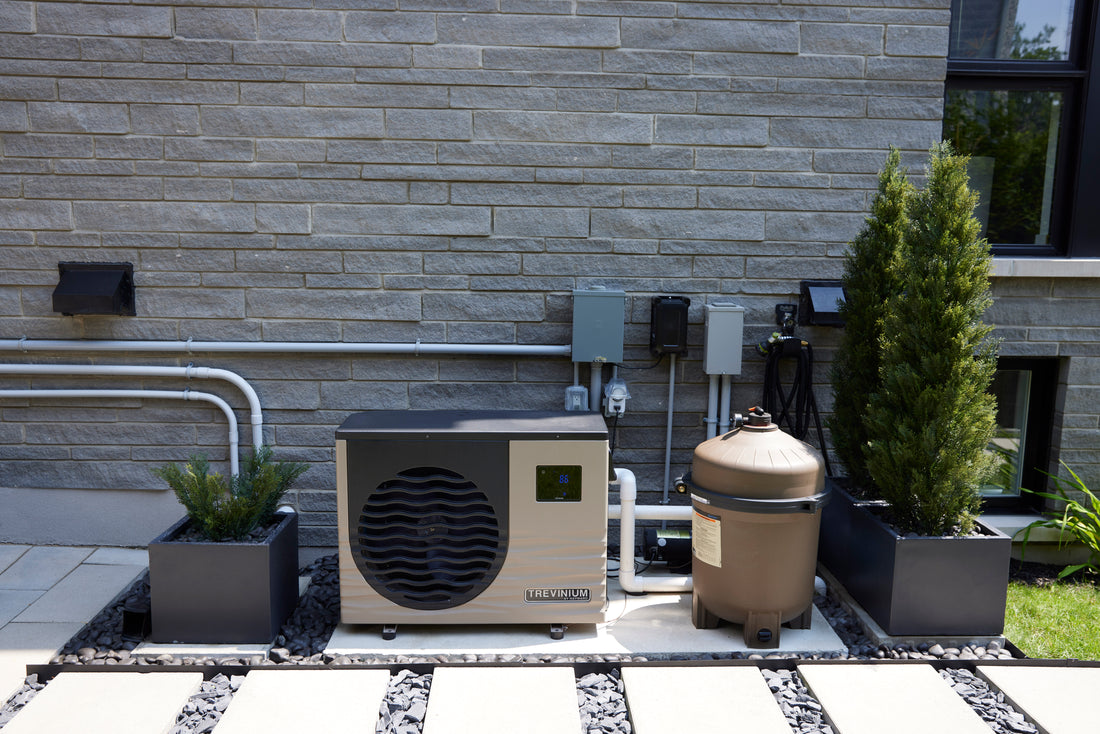
To connect a pool heat pump The device needs to be connected to filtration system existing.

  1. Turn off the power supply before any handling.
  2. Install the heat pump on a stable and clear surface, near the filter and the water return.
  3. Connect the hoses: the filter outlet pipe goes to the heat pump water inlet; the water outlet returns to the pool.
  4. Ensure a watertight seal with hose clamps and Teflon tape.

LThe electrical connection must be made by a certified electrician.

Note: Valves for by passing are not mandatory.

Oui, la thermopompe doit toujours être allumée en continu. Laissez-la en mode automatique pendant la saison : elle démarre au besoin pour maintenir la consigne.

Éteignez-la en cas de tempête de poussière, de travaux, ou hors saison.