
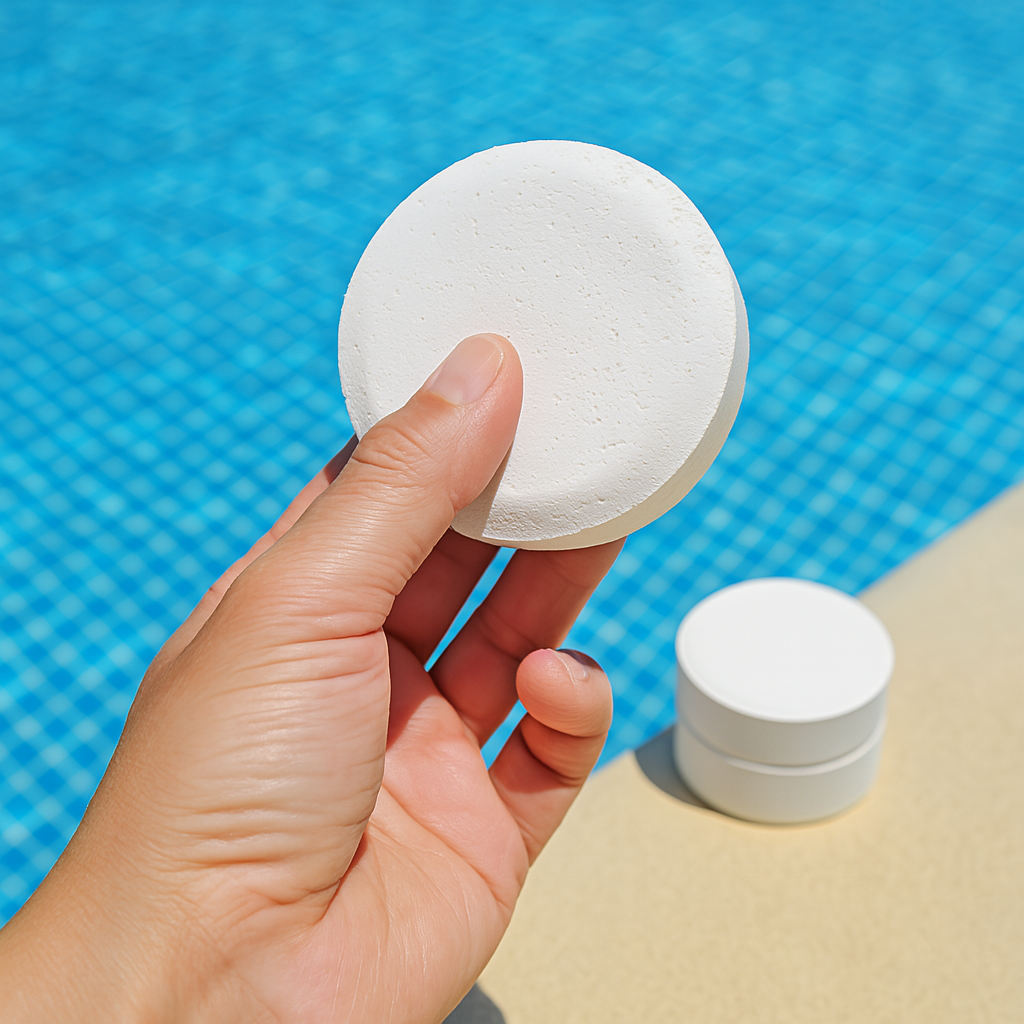

Pool chlorine

Pool chlorine is the most widely used disinfectant for keeping pool water clear, healthy, and safe. Available in granules, tablets, or liquid, it destroys bacteria, algae, and impurities while maintaining proper water balance. Essential for maintenance, it ensures comfort and peace of mind throughout the swimming season.

Filter

Product Title

Regular price
$19.99
Sale price
$19.99
Regular price

Product Title

Regular price
$19.99
Sale price
$19.99
Regular price

Product Title

Regular price
$19.99
Sale price
$19.99
Regular price

Product Title

Regular price
$19.99
Sale price
$19.99
Regular price

Product Title

Regular price
$19.99
Sale price
$19.99
Regular price

Product Title

Regular price
$19.99
Sale price
$19.99
Regular price

Product Title

Regular price
$19.99
Sale price
$19.99
Regular price

Product Title

Regular price
$19.99
Sale price
$19.99
Regular price

Product Title

Regular price
$19.99
Sale price
$19.99
Regular price

Product Title

Regular price
$19.99
Sale price
$19.99
Regular price

Product Title

Regular price
$19.99
Sale price
$19.99
Regular price

Product Title

Regular price
$19.99
Sale price
$19.99
Regular price

Product Title

Regular price
$19.99
Sale price
$19.99
Regular price

Product Title

Regular price
$19.99
Sale price
$19.99
Regular price

Product Title

Regular price
$19.99
Sale price
$19.99
Regular price

Product Title

Regular price
$19.99
Sale price
$19.99
Regular price

Product Title

Regular price
$19.99
Sale price
$19.99
Regular price

Product Title

Regular price
$19.99
Sale price
$19.99
Regular price

Product Title

Regular price
$19.99
Sale price
$19.99
Regular price

Product Title

Regular price
$19.99
Sale price
$19.99
Regular price

Product Title

Regular price
$19.99
Sale price
$19.99
Regular price

Product Title

Regular price
$19.99
Sale price
$19.99
Regular price

Product Title

Regular price
$19.99
Sale price
$19.99
Regular price

Product Title

Regular price
$19.99
Sale price
$19.99
Regular price

FAQ

Depending on your needs, you can opt for granules, tablets, liquid chlorine, or even an automatic sanitation system. Each solution offers a different mode of action to keep your water clear and safe. To learn more, consult our guide.

Learn more


Yes, they can be used together, as they have complementary functions: chlorine disinfects and algaecide prevents algae growth. However, they should never be mixed in the same container; add them separately to the pool with the pump running.


Chlorine is not harmful in normal doses, but it can dry out the skin, especially for sensitive individuals. A shower after swimming helps to remove residue and moisturize the skin.


When used correctly, it is safe. However, if handled incorrectly, it can irritate the eyes, skin, or respiratory system. Never mix chlorine with other chemicals and always handle it with dry hands.


Yes, chlorine can lighten or weaken textile fibers, especially if clothes are exposed to a high concentration or left to soak. Dark-colored and cotton swimsuits are the most susceptible.


Properly balanced chlorine has almost no odor. Strong odors actually come fromchloraminesThese are byproducts formed when chlorine is lacking and reacts with impurities. Paradoxically, a strong odor often indicates a chlorine deficiency. A shock treatment quickly corrects the situation.


First, check that the salt level is within the correct range. Then, increase the cell's production. If the water is cloudy or after heavy swimming, perform a shock treatment (ideally with unstabilized chlorine). Also, clean the cell if it has calcium buildup: a dirty cell produces less chlorine.


Once in water, chlorine transforms into hypochlorous acid, a highly reactive molecule that destroys bacteria by oxidizing their cell membranes. This process is rapid and effective, even at low concentrations. This is why chlorine remains the most widely used disinfectant in swimming pools.


The simplest way is to leave the pool in the sun: UV rays naturally destroy chlorine. Use a chlorine neutralizer (chlorine destroyer) for an immediate effect. When the chlorine level exceeds 5 ppm, it's best to wait before swimming.


To raise the free chlorine level, add granular chlorine or increase the opening of the chlorinator/float. Also, ensure the pH is properly adjusted (ideally 7.2–7.6), as a pH that is too high renders chlorine almost ineffective. In hot weather or after heavy swimming, a shock treatment may be necessary to restore the level.


After regularly adding chlorine, wait approximately30 minuteswith the pump running. After shock treatment, you must wait.30 minutes to 1 hour, depending on the dose used. Always check that the chlorine isbelow 5 ppmbefore swimming.


For most residential pools, we put1 to 3 lozengesin a chlorinator or a floating dispenser. The exact amount depends on the water volume, temperature, and sunlight. The goal is to maintain1–3 ppmIf the chlorine level drops too quickly, slightly increase the float opening or add an extra tablet.


Chlorine can dry out hair and make it look paler, especially if it's already colored or damaged. However, the greenish tint sometimes seen doesn't come from chlorine, but from copper present in some waters or products. After swimming, rinse your hair and use a mild shampoo to minimize the drying effect.


No, chlorine is not flammable. However, some chlorinated products can react violently if mixed with other substances such as acids or organic matter. Therefore, chlorine should always be handled separately, with dry hands, and in a well-ventilated area.


The goal is not to add a fixed amount, but to maintain a constant level of free chlorine between1 and 3 ppmChlorine consumption varies depending on the heat, swimming, rain, and sunshine. The warmer and sunnier it is, the faster the chlorine is consumed. Test the water every day or every other day and adjust accordingly.


To apply powdered (granular) chlorine, first fill a bucket with water, then dissolve the recommended amount of product in it. Next, slowly pour the solution around the perimeter of the pool with the pump running to ensure proper distribution. Never pour the granules directly into the skimmer, as this can damage the plumbing or filter. Allow the water to circulate for at least 30 minutes, or even an hour, before swimming.


Chlorine is a disinfectant used to keep pool water clean, clear, and safe. It eliminates germs, destroys algae, and neutralizes contaminants brought in by swimmers (sweat, sunscreen, dirt). It is available in several forms: granules, tablets, liquid, or generated by a salt system. Proper chlorine management is essential to maintain healthy water and prevent odors or irritation.


Yes. Chlorine is one of the most effective disinfectants for swimming pool water. As soon as it dissolves, it forms hypochlorous acid, a molecule that quickly destroys bacteria, viruses, and microorganisms by oxidizing their cell membranes. A free chlorine level between 1 and 3 ppm ensures safe water, reduces the risk of skin and eye infections, and prevents algae growth. Well-balanced water (pH 7.2–7.6) significantly improves its effectiveness.

Chlorine must be stored in a dry, well-ventilated, cool place, away from any source of moisture. Never store it in an enclosed, unventilated space such as a damp basement or garage, or near other chemicals (acids, solvents, fertilizers). Keep it in its original container, away from flames, metal, and animals.