Chemicals: Save up to 10% when you buy 3+ identical items. Learn more
Free online maintenance courses. Learn more
Shop above-ground pools online exclusively, with or without installation. Learn more
INNOVA Loyalty Program: create your account, earn points and enjoy exclusive benefits! Learn more
Free shipping on $50+ for chemicals and small accessories.
Liquid Chlorine for Swimming Pools - Summer Smiles
Regular price
$9.48
Sale price
$9.48
Sale
0% off
Regular price
$9.48
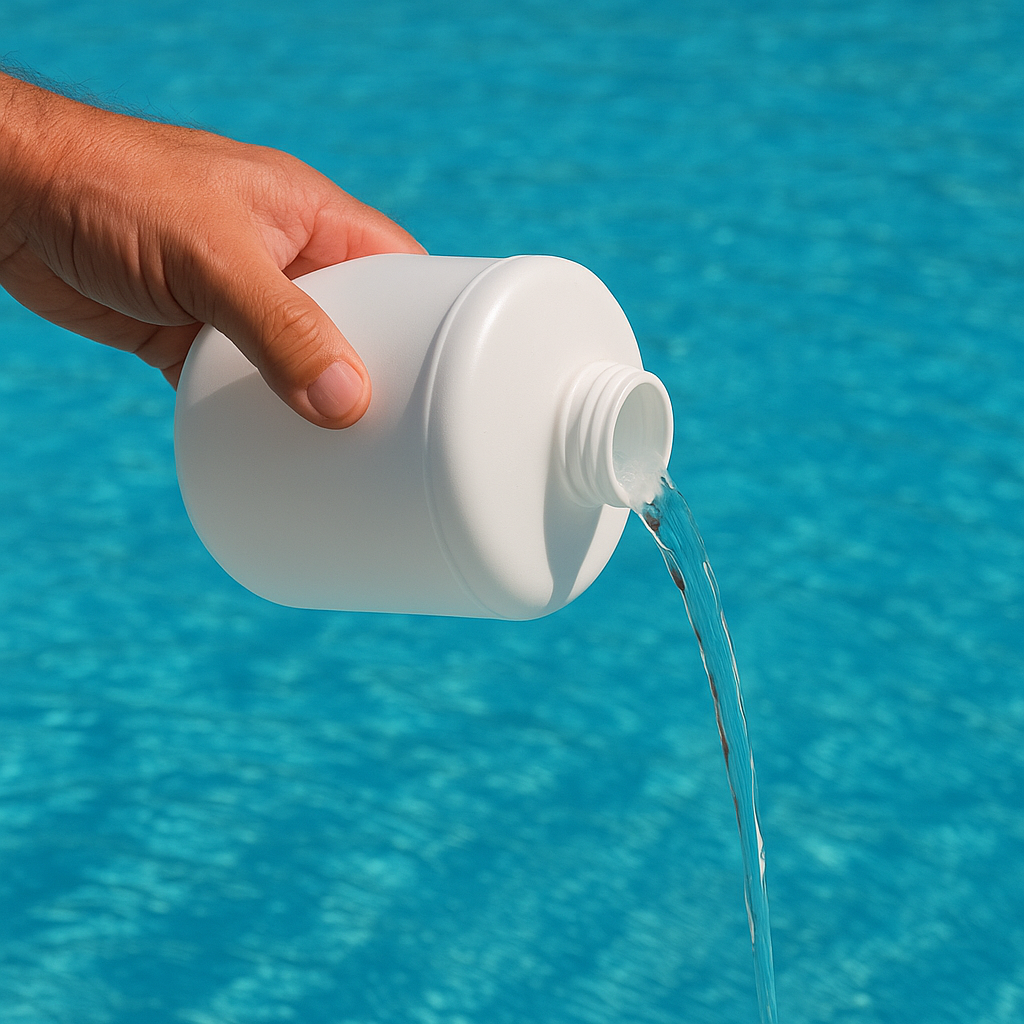
Summer Smiles liquid chlorine is a powerful sanitizer designed to effectively disinfect pool water. Its unstabilized formula acts quickly to eliminate bacteria, algae, and contaminants present in the water. Ideal for quick treatments or chlorine adjustments, this product offers immediate action and effective disinfection.
Read more
Read less
SKU: 39397
Availability
In-store pickup
Pickup available in 24 hours at 04 Laval
Pickup unavailable at 04 Laval
In-store availability
16
In stock at
04 Laval
16
In stock at
04 Laval
Sold out at
04 Laval
Summer Smiles liquid chlorine is a powerful sanitizer designed to effectively disinfect pool water. Its unstabilized formula acts quickly to eliminate bacteria, algae, and contaminants present in the water. Ideal for quick treatments or chlorine adjustments, this product offers immediate action and effective disinfection. For optimal effectiveness in outdoor pools, it is recommended to use it with a stabilizer to protect the chlorine from degradation caused by the sun's UV rays.
Features
Fast-acting, unstabilized liquid chlorine
Effectively eliminates bacteria, algae, and contaminants
Rapid disinfection ideal for regular pool maintenance
Use with a stabilizer to protect chlorine from UV rays
Convenient 3.6 or 4 liter format
Compatible with above-ground and in-ground pools
Type: Non-stabilized liquid chlorine
Application: Swimming pool water disinfection
Format: 3.6 liters
Use: Regular maintenance and rapid chlorine level adjustment
Main Actions:
Disinfect
Product Category:
Sanitizers
Forms:
Liquid
Application Method:
To pour directly into the water
Usage Period:
Daily
Water Balance:
Chlorine too low
Safety and Storage:
Add granules to water, never the reverse,
Follow the manufacturer's instructions,
Store away from cold,
Store away from heat,
Store in a cool, dry place,
Use appropriate protective equipment,
Avoid contact with skin,
Keep out of reach of children and animals,
Protect eyes
Basin Type:
Pool
Precautions and first aid
WARNINGS: Ingestion can cause death. CORROSIVE to eyes. AVOID contact with eyes. Corrosive to skin. AVOID contact with skin. Harmful if inhaled. Avoid inhaling dust and fumes. Do not apply in windy conditions. Wear safety glasses, protective clothing, and rubber gloves when handling this product. KEEP OUT OF REACH OF CHILDREN. Powerful oxidizing agent. May cause fire or explosion if contaminated. Forms dangerous gas if mixed with an acid. Do not mix with any other chemical. Avoid contact with skin and eyes. Dangerous or fatal if swallowed. Keep container closed and store in a cool, dry place. Rinse container thoroughly before disposal. Do not reuse.
FIRST AID: In case of skin or eye contact, rinse thoroughly with water for 15 minutes. For eye contact, consult a doctor. In case of ingestion, give 2 or 3 glasses of milk or water. Call a doctor IMMEDIATELY.
Delivery is free for chemicals and small accessories with purchases of $50 or more. A $10 fee applies to orders under $50. We deliver quickly across Canada for this item.
Add the required amount of liquid chlorine directly to the pool to maintain afree chlorine level between 1 and 3 ppm.
For outdoor pools, it is recommended to use astabilizer (cyanuric acid)in order to protect the chlorine from UV rays and prolong its effectiveness.
Liquid chlorine can also be used to perform arapid shock treatmentwhen the water becomes cloudy or after intensive use of the pool.
Key Characteristics
Disinfection power
A high concentration of active chlorine that effectively eliminates bacteria, algae and contaminants for clean and safe water.
Product effectiveness
Product designed to effectively destroy bacteria such as algae and ensure healthy and safe water.
Quick action
Ideal for daily maintenance or intensive treatments
Immediate dissolution
Mixes instantly with water for fast effectiveness.
Summer Smiles liquid chlorine is a powerful sanitizer designed to effectively disinfect pool water. Its unstabilized formula acts quickly to eliminate bacteria, algae, and contaminants present in the water. Ideal for quick treatments or chlorine adjustments, this product offers immediate action and effective disinfection.
Read more
Read less
Fast-acting concentrated formula – Effectively disinfects pool water by eliminating bacteria, algae, and contaminants.
Unstabilized liquid chlorine – Convenient 3.6 L or 4 L format allows for quick adjustment of chlorine levels in the water.
Immediate action – Mixes quickly with water for fast and effective disinfection.
Stabilizer-free formula – Allows for control of stabilizer levels in the water and can be used with a stabilizer for outdoor pools.
Simple to use – Ideal for regular maintenance and quick adjustments, compatible with above-ground and in-ground pools.
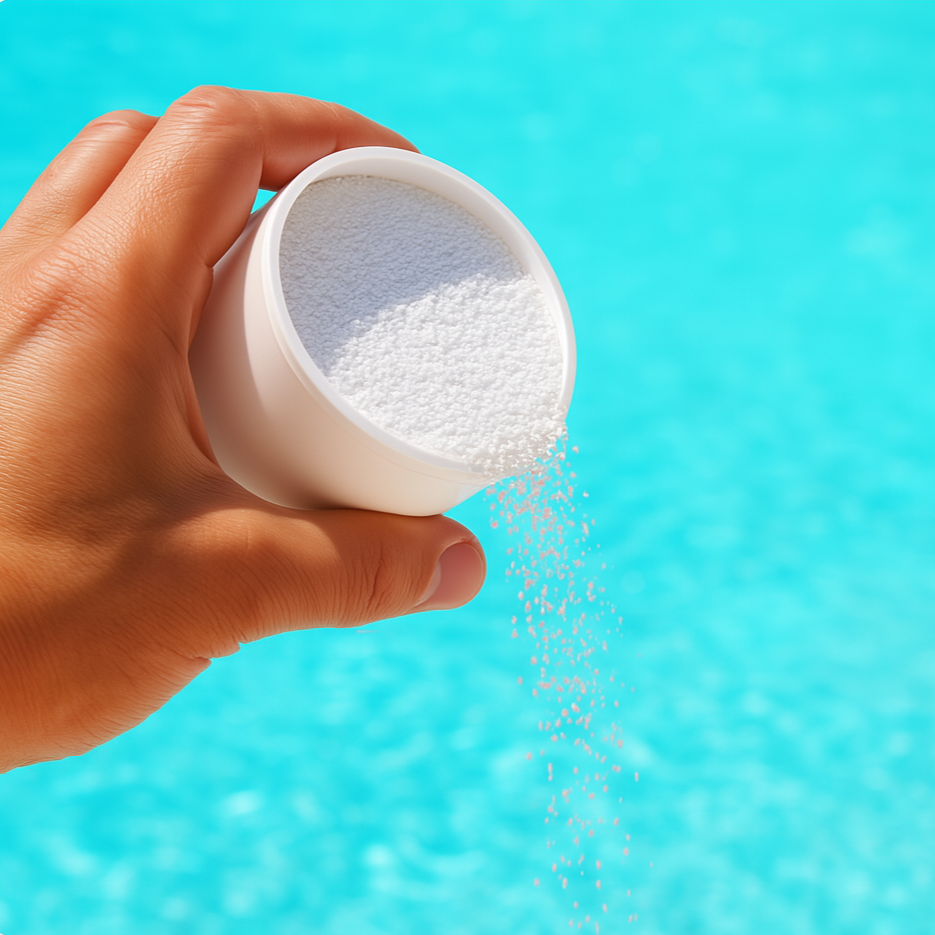
INNOVA CHLOR 70% granular chlorine is a powerful disinfectant designed to keep your pool water clean, healthy, and perfectly balanced. Thanks to its rapid dissolution, it acts immediately to eliminate bacteria, algae, and contaminants present in the water.
Read more
Read less
70% available chlorine (calcium hypochlorite) – Concentrated formula providing powerful disinfection to maintain clean and safe pool water.
Granulated chlorine – Convenient format allowing precise dosing for regular maintenance or more intensive treatments.
Fast dissolving – Acts immediately in water to effectively eliminate bacteria, algae and contaminants.
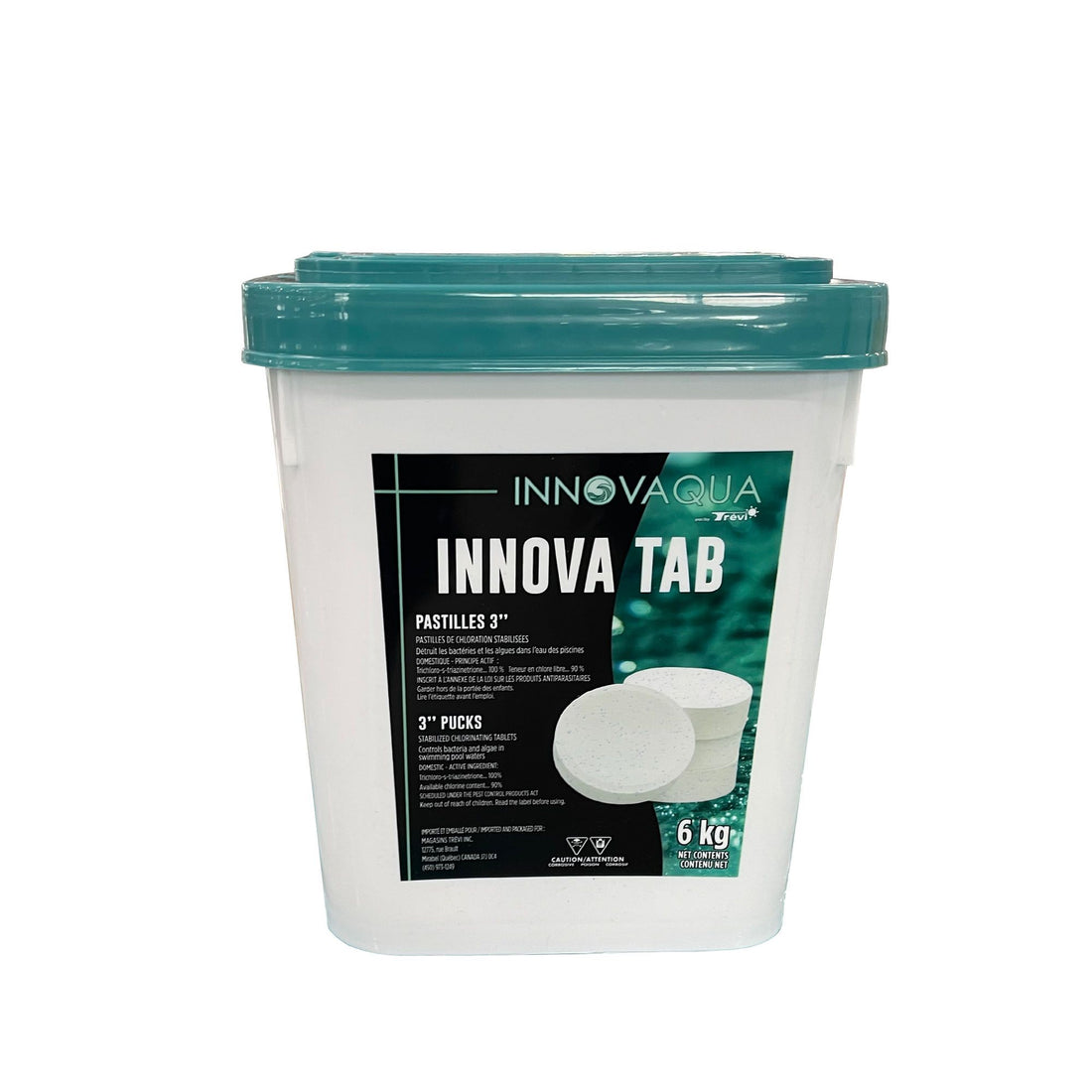
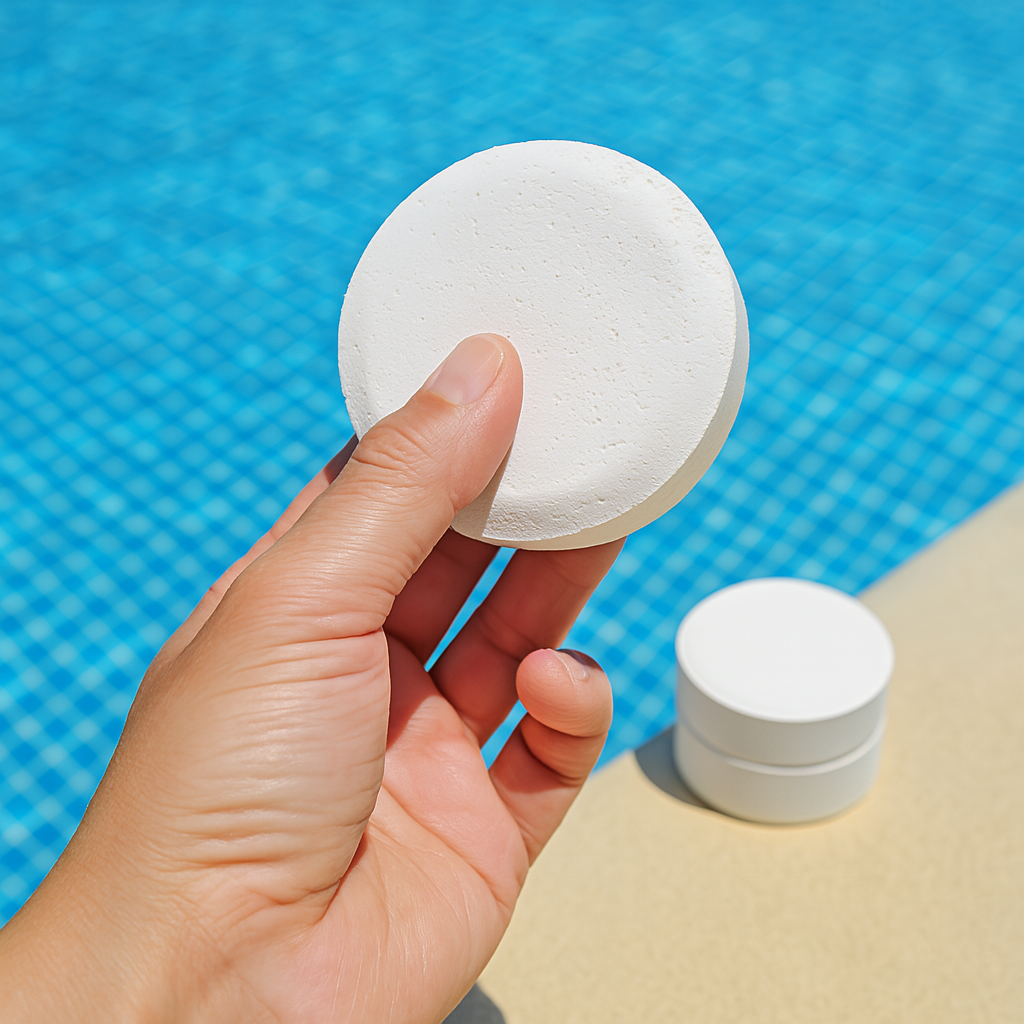
The INNOVA TAB STABILIZED CHLORINE TABLETS are 3-inch tablets designed to effectively disinfect pool water. These tablets are formulated to destroy bacteria and algae, ensuring your pool water stays clean and clear. Their stabilized formula provides long-lasting protection, keeping the chlorine active and effective for an extended period, even in the presence of sunlight. The 3-inch size allows for easy and precise dosing, making it a convenient solution for maintaining pool hygiene.
Read more
Read less
90% active chlorine (Trichloro-s-triazinetrione) – Highly concentrated formula providing powerful disinfection to maintain clean and safe water.
Stabilized 3-inch pellets (200g) – Ideal size for use in a skimmer or automatic dispenser.
Slow release – Gradually releases chlorine to ensure continuous disinfection and prolonged water protection.
Stabilized formula – Protects chlorine from UV rays and helps to effectively eliminate bacteria, algae and microorganisms while maintaining clear water.
Simple to use – Easy to dose and compatible with above-ground and in-ground pools for regular and effective maintenance.
Learn how to master the essential steps to maintain your pool throughout the summer and enjoy clean, healthy water. To go further, check out our complete pool maintenance guide or sign up for our online courses to simplify your routine and adopt best practices.
Après l’analyse de votre eau en magasin, la liste de produits peut vous sembler importante même si l’apparence de l’eau ne vous apparaît pas inadéquate. Pourtant, chaque produit a sa propre utilité. Jetons un coup au rapport d’analyse! Les produits à ajouter sont mentionnés et numérotés! Il faut respecter l’ordre d’ajout des produits pour en maximiser l’utilisation.
1- ALCALINITÉ TOTALE
Après le manque de chlore, il s’agit de la principale cause des problèmes d'eau. Lorsque l'alcalinité est trop basse, on détecte des odeurs de chlore, les yeux chauffent, des algues se forment, le pH se dérègle et le chlore disparaît rapidement. Attention, votre eau est quand même très claire. Lorsque l'alcalinité est trop élevée, la peau s'irrite, le chlore n'agit plus, le pH se dérègle et l'eau se brouille.
Si l'eau de votre piscine provient d'un puits artésien, elle pourrait déjà avoir une certaine alcalinité; il faut donc la surveiller correctement si vous ajoutez de l’eau pendant la saison.Pour augmenter l'alcalinité, utilisez Trévi Alca+.
2- pH
Le pH, c’est l’acidité de l’eau. Si le pH est mal réglé, le chlore n'agit pas et l'eau se brouille. À la base, le pH est un facteur qui augmente régulièrement; il faut donc souvent l’abaisser. Idéalement, le vérifier au moins toutes les 2 semaines.Il devrait se situer entre 7,4 et 7,6.Pour augmenter le pH, utilisez Trévi pH plus.Pour diminuer le pH, utilisez Trévi pH minus.
3- CHLORE LIBRE
Le chlore sert à débarrasser l'eau des bactéries et à éliminer les algues. Il est un puissant agent oxydant et désinfectant. Lorsque le chlore est trop élevé, il brûle les yeux, dégage des odeurs et décolore les maillots de bain. Lorsque le chlore est trop faible, il n'élimine pas les bactéries; l'eau se brouille et il se forme de la chloramine. Il y a également un risque d'irritation de la peau.
4- DURETÉ
La dureté de l'eau dépend de la teneur en calcium et en magnésium de l'eau. L'alcalinité, le pH et la quantité de chlore influencent la dureté. Il est donc important de bien les ajuster avant d'analyser la dureté. Une dureté trop haute favorise la formation de tartre et de calcaire et irrite la peau. Une dureté trop basse peut causer de la corrosion.Pour augmenter la dureté, utilisez Trévi Calcium+Pour diminuer la dureté, utilisez Trévi Metaloc plus
Enfin, on conseille un stabilisateur de chlore. Une eau bien stabilisée fait réaliser des économies importantes de chlore durant la saison. Pour éviter que le chlore ne s’évapore trop vite, ou qu’on en ajoute trop, utilisez le stabilisateur de chlore. Pour augmenter le taux d’acide cyanurique et stabiliser votre eau, ajoutez simplement Trévi Stab plus dans l’écumoire.Pour diminuer le taux d’acide cyanurique, il suffit d’ajouter de l’eau pour le diluer.
Il est important d’attendre au moins 4 heures entre chaque ajout de produit. Si vous avez un système au sel, laissez-le fermer jusqu’à 24 heures après avoir ajouté le dernier produit.Faites régulièrement vos tests maison avec des gouttes ou des bandelettes pour ne pas perdre le contrôle de la qualité de votre eau cet été! Surveillez les dates d’expiration des bandelettes et changez les gouttes chaque saison!
It is now time to choose the sanitizing system you wish to use to treat your pool water. Many options are available.
Owners of salt chlorination systems must remember to turn on the system cell only when the water reaches +/- 65°F to ensure that the cell generates enough chlorine to properly treat the water. If pool water has not reached this temperature, you can use granulated chlorine as indicated on the container.
For owners of ozone generators and chlorinators, temperature restrictions do not apply. You can use these systems when starting the pool.
Finally, know that there is another simple and efficient way to treat your pool water – use our maintenance kits available in stores.
Chose the option that suits you best to enjoy your pool all summer long!
Lors du grand nettoyage de la piscine au printemps, nous pouvons souvent remarquer un cerne qui s'est créé au dessus de la ligne d'eau. Trévi vous propose 2 produits très efficaces afin d'enlever ces saletés tout en étant sécuritaires pour votre piscine.
Le Vynil Net et le Off the Wall peuvent aussi très bien être utiliser pour nettoyer vos meubles de jardin. Ils sont bons pour le plastique, le vinyle et même la céramique.
Throughout the summer, it is your responsibility to test your water once a week with the help of strips or droplets. These tests will help keep your water clean, safe and enjoyable to swim in.
It is also very important to visit the store with a water sample once a month to have your water tested at the test counter for a complete analysis and to balance it properly. You will need to take a water sample that has been collected from your pool in a sterile bottle no more than 2 to 3 hours before the test.
To analyze the water, we will need to know the volume of water in your pool or the size of the pool and your sanitation system, either salt or chlorine. We will then be able to give you the appropriate recipe to make the water safe for the pool, the equipment and the swimmers.
This will yield important information, starting with your chlorine level. This should be kept between 1 and 3 ppm, or 1 if you have an ozonator. If you are having trouble keeping your chlorine level stable, it may be due to the pH, which should be between 7.4 and 7.6. A pH that is too high or too low will affect the chlorine. For example, the chlorine may evaporate too quickly if the pH is too low, or it may not work at its full capacity if the pH is too high. Be aware that the pH of your eyes is 7.5, which is one of the reasons why the pH of your water should be between 7.4 and 7.6. This will prevent your eyes from hurting upon contact with the water.
If you are having trouble with your pH, it may be because the alkalinity is out of balance. At the water analysis counter, our advisors can help you balance this parameter and inform you about the level of calcium in your pool. This is another important aspect of preserving your equipment for as long as possible, since it has an impact on corrosion, among other things.
Follow the steps of the recommended recipe, since you have waiting times between each addition and must respect a specific order when adding products to your pool. You should also refer to the labels on the products, as each product can be added to the water in a different way, either diluted or directly in the pool. Your water will then be clean and pleasant to swim in.
Il est très important d'avoir une eau de piscine bien balancée tout au long de l'été. Le premier balancement d'eau est le plus important afin de bien commencer la saison, mais par la suite, nous vous recommandons de vous rendre en magasin environs une fois par mois avec un échantillon d'eau.
En plus de vous permettre d'avoir une eau saine, agréable à la baignade et sécuritaire, bien balancer votre eau vous permettre de prolonger la durée de vie de vos équipements.
En procédant à une analyse complète de votre eau en magasin, vous recevrez les instructions complètes pour savoir comment ajuster les paramètres importants et quelle quantité de produits mettre exactement.
Après l’analyse de votre eau en magasin, la liste de produits peut vous sembler importante même si l’apparence de l’eau ne vous apparaît pas inadéquate. Pourtant, chaque produit a sa propre utilité. Jetons un coup au rapport d’analyse! Les produits à ajouter sont mentionnés et numérotés! Il faut respecter l’ordre d’ajout des produits pour en maximiser l’utilisation.
1- ALCALINITÉ TOTALE
Après le manque de chlore, il s’agit de la principale cause des problèmes d'eau. Lorsque l'alcalinité est trop basse, on détecte des odeurs de chlore, les yeux chauffent, des algues se forment, le pH se dérègle et le chlore disparaît rapidement. Attention, votre eau est quand même très claire. Lorsque l'alcalinité est trop élevée, la peau s'irrite, le chlore n'agit plus, le pH se dérègle et l'eau se brouille.
Si l'eau de votre piscine provient d'un puits artésien, elle pourrait déjà avoir une certaine alcalinité; il faut donc la surveiller correctement si vous ajoutez de l’eau pendant la saison.Pour augmenter l'alcalinité, utilisez Trévi Alca+.
2- pH
Le pH, c’est l’acidité de l’eau. Si le pH est mal réglé, le chlore n'agit pas et l'eau se brouille. À la base, le pH est un facteur qui augmente régulièrement; il faut donc souvent l’abaisser. Idéalement, le vérifier au moins toutes les 2 semaines.Il devrait se situer entre 7,4 et 7,6.Pour augmenter le pH, utilisez Trévi pH plus.Pour diminuer le pH, utilisez Trévi pH minus.
3- CHLORE LIBRE
Le chlore sert à débarrasser l'eau des bactéries et à éliminer les algues. Il est un puissant agent oxydant et désinfectant. Lorsque le chlore est trop élevé, il brûle les yeux, dégage des odeurs et décolore les maillots de bain. Lorsque le chlore est trop faible, il n'élimine pas les bactéries; l'eau se brouille et il se forme de la chloramine. Il y a également un risque d'irritation de la peau.
4- DURETÉ
La dureté de l'eau dépend de la teneur en calcium et en magnésium de l'eau. L'alcalinité, le pH et la quantité de chlore influencent la dureté. Il est donc important de bien les ajuster avant d'analyser la dureté. Une dureté trop haute favorise la formation de tartre et de calcaire et irrite la peau. Une dureté trop basse peut causer de la corrosion.Pour augmenter la dureté, utilisez Trévi Calcium+Pour diminuer la dureté, utilisez Trévi Metaloc plus
Enfin, on conseille un stabilisateur de chlore. Une eau bien stabilisée fait réaliser des économies importantes de chlore durant la saison. Pour éviter que le chlore ne s’évapore trop vite, ou qu’on en ajoute trop, utilisez le stabilisateur de chlore. Pour augmenter le taux d’acide cyanurique et stabiliser votre eau, ajoutez simplement Trévi Stab plus dans l’écumoire.Pour diminuer le taux d’acide cyanurique, il suffit d’ajouter de l’eau pour le diluer.
Il est important d’attendre au moins 4 heures entre chaque ajout de produit. Si vous avez un système au sel, laissez-le fermer jusqu’à 24 heures après avoir ajouté le dernier produit.Faites régulièrement vos tests maison avec des gouttes ou des bandelettes pour ne pas perdre le contrôle de la qualité de votre eau cet été! Surveillez les dates d’expiration des bandelettes et changez les gouttes chaque saison!
It is now time to choose the sanitizing system you wish to use to treat your pool water. Many options are available.
Owners of salt chlorination systems must remember to turn on the system cell only when the water reaches +/- 65°F to ensure that the cell generates enough chlorine to properly treat the water. If pool water has not reached this temperature, you can use granulated chlorine as indicated on the container.
For owners of ozone generators and chlorinators, temperature restrictions do not apply. You can use these systems when starting the pool.
Finally, know that there is another simple and efficient way to treat your pool water – use our maintenance kits available in stores.
Chose the option that suits you best to enjoy your pool all summer long!
Lors du grand nettoyage de la piscine au printemps, nous pouvons souvent remarquer un cerne qui s'est créé au dessus de la ligne d'eau. Trévi vous propose 2 produits très efficaces afin d'enlever ces saletés tout en étant sécuritaires pour votre piscine.
Le Vynil Net et le Off the Wall peuvent aussi très bien être utiliser pour nettoyer vos meubles de jardin. Ils sont bons pour le plastique, le vinyle et même la céramique.
Throughout the summer, it is your responsibility to test your water once a week with the help of strips or droplets. These tests will help keep your water clean, safe and enjoyable to swim in.
It is also very important to visit the store with a water sample once a month to have your water tested at the test counter for a complete analysis and to balance it properly. You will need to take a water sample that has been collected from your pool in a sterile bottle no more than 2 to 3 hours before the test.
To analyze the water, we will need to know the volume of water in your pool or the size of the pool and your sanitation system, either salt or chlorine. We will then be able to give you the appropriate recipe to make the water safe for the pool, the equipment and the swimmers.
This will yield important information, starting with your chlorine level. This should be kept between 1 and 3 ppm, or 1 if you have an ozonator. If you are having trouble keeping your chlorine level stable, it may be due to the pH, which should be between 7.4 and 7.6. A pH that is too high or too low will affect the chlorine. For example, the chlorine may evaporate too quickly if the pH is too low, or it may not work at its full capacity if the pH is too high. Be aware that the pH of your eyes is 7.5, which is one of the reasons why the pH of your water should be between 7.4 and 7.6. This will prevent your eyes from hurting upon contact with the water.
If you are having trouble with your pH, it may be because the alkalinity is out of balance. At the water analysis counter, our advisors can help you balance this parameter and inform you about the level of calcium in your pool. This is another important aspect of preserving your equipment for as long as possible, since it has an impact on corrosion, among other things.
Follow the steps of the recommended recipe, since you have waiting times between each addition and must respect a specific order when adding products to your pool. You should also refer to the labels on the products, as each product can be added to the water in a different way, either diluted or directly in the pool. Your water will then be clean and pleasant to swim in.
Il est très important d'avoir une eau de piscine bien balancée tout au long de l'été. Le premier balancement d'eau est le plus important afin de bien commencer la saison, mais par la suite, nous vous recommandons de vous rendre en magasin environs une fois par mois avec un échantillon d'eau.
En plus de vous permettre d'avoir une eau saine, agréable à la baignade et sécuritaire, bien balancer votre eau vous permettre de prolonger la durée de vie de vos équipements.
En procédant à une analyse complète de votre eau en magasin, vous recevrez les instructions complètes pour savoir comment ajuster les paramètres importants et quelle quantité de produits mettre exactement.
Après l’analyse de votre eau en magasin, la liste de produits peut vous sembler importante même si l’apparence de l’eau ne vous apparaît pas inadéquate. Pourtant, chaque produit a sa propre utilité. Jetons un coup au rapport d’analyse! Les produits à ajouter sont mentionnés et numérotés! Il faut respecter l’ordre d’ajout des produits pour en maximiser l’utilisation.
1- ALCALINITÉ TOTALE
Après le manque de chlore, il s’agit de la principale cause des problèmes d'eau. Lorsque l'alcalinité est trop basse, on détecte des odeurs de chlore, les yeux chauffent, des algues se forment, le pH se dérègle et le chlore disparaît rapidement. Attention, votre eau est quand même très claire. Lorsque l'alcalinité est trop élevée, la peau s'irrite, le chlore n'agit plus, le pH se dérègle et l'eau se brouille.
Si l'eau de votre piscine provient d'un puits artésien, elle pourrait déjà avoir une certaine alcalinité; il faut donc la surveiller correctement si vous ajoutez de l’eau pendant la saison.Pour augmenter l'alcalinité, utilisez Trévi Alca+.
2- pH
Le pH, c’est l’acidité de l’eau. Si le pH est mal réglé, le chlore n'agit pas et l'eau se brouille. À la base, le pH est un facteur qui augmente régulièrement; il faut donc souvent l’abaisser. Idéalement, le vérifier au moins toutes les 2 semaines.Il devrait se situer entre 7,4 et 7,6.Pour augmenter le pH, utilisez Trévi pH plus.Pour diminuer le pH, utilisez Trévi pH minus.
3- CHLORE LIBRE
Le chlore sert à débarrasser l'eau des bactéries et à éliminer les algues. Il est un puissant agent oxydant et désinfectant. Lorsque le chlore est trop élevé, il brûle les yeux, dégage des odeurs et décolore les maillots de bain. Lorsque le chlore est trop faible, il n'élimine pas les bactéries; l'eau se brouille et il se forme de la chloramine. Il y a également un risque d'irritation de la peau.
4- DURETÉ
La dureté de l'eau dépend de la teneur en calcium et en magnésium de l'eau. L'alcalinité, le pH et la quantité de chlore influencent la dureté. Il est donc important de bien les ajuster avant d'analyser la dureté. Une dureté trop haute favorise la formation de tartre et de calcaire et irrite la peau. Une dureté trop basse peut causer de la corrosion.Pour augmenter la dureté, utilisez Trévi Calcium+Pour diminuer la dureté, utilisez Trévi Metaloc plus
Enfin, on conseille un stabilisateur de chlore. Une eau bien stabilisée fait réaliser des économies importantes de chlore durant la saison. Pour éviter que le chlore ne s’évapore trop vite, ou qu’on en ajoute trop, utilisez le stabilisateur de chlore. Pour augmenter le taux d’acide cyanurique et stabiliser votre eau, ajoutez simplement Trévi Stab plus dans l’écumoire.Pour diminuer le taux d’acide cyanurique, il suffit d’ajouter de l’eau pour le diluer.
Il est important d’attendre au moins 4 heures entre chaque ajout de produit. Si vous avez un système au sel, laissez-le fermer jusqu’à 24 heures après avoir ajouté le dernier produit.Faites régulièrement vos tests maison avec des gouttes ou des bandelettes pour ne pas perdre le contrôle de la qualité de votre eau cet été! Surveillez les dates d’expiration des bandelettes et changez les gouttes chaque saison!
It is now time to choose the sanitizing system you wish to use to treat your pool water. Many options are available.
Owners of salt chlorination systems must remember to turn on the system cell only when the water reaches +/- 65°F to ensure that the cell generates enough chlorine to properly treat the water. If pool water has not reached this temperature, you can use granulated chlorine as indicated on the container.
For owners of ozone generators and chlorinators, temperature restrictions do not apply. You can use these systems when starting the pool.
Finally, know that there is another simple and efficient way to treat your pool water – use our maintenance kits available in stores.
Chose the option that suits you best to enjoy your pool all summer long!
Lors du grand nettoyage de la piscine au printemps, nous pouvons souvent remarquer un cerne qui s'est créé au dessus de la ligne d'eau. Trévi vous propose 2 produits très efficaces afin d'enlever ces saletés tout en étant sécuritaires pour votre piscine.
Le Vynil Net et le Off the Wall peuvent aussi très bien être utiliser pour nettoyer vos meubles de jardin. Ils sont bons pour le plastique, le vinyle et même la céramique.
Throughout the summer, it is your responsibility to test your water once a week with the help of strips or droplets. These tests will help keep your water clean, safe and enjoyable to swim in.
It is also very important to visit the store with a water sample once a month to have your water tested at the test counter for a complete analysis and to balance it properly. You will need to take a water sample that has been collected from your pool in a sterile bottle no more than 2 to 3 hours before the test.
To analyze the water, we will need to know the volume of water in your pool or the size of the pool and your sanitation system, either salt or chlorine. We will then be able to give you the appropriate recipe to make the water safe for the pool, the equipment and the swimmers.
This will yield important information, starting with your chlorine level. This should be kept between 1 and 3 ppm, or 1 if you have an ozonator. If you are having trouble keeping your chlorine level stable, it may be due to the pH, which should be between 7.4 and 7.6. A pH that is too high or too low will affect the chlorine. For example, the chlorine may evaporate too quickly if the pH is too low, or it may not work at its full capacity if the pH is too high. Be aware that the pH of your eyes is 7.5, which is one of the reasons why the pH of your water should be between 7.4 and 7.6. This will prevent your eyes from hurting upon contact with the water.
If you are having trouble with your pH, it may be because the alkalinity is out of balance. At the water analysis counter, our advisors can help you balance this parameter and inform you about the level of calcium in your pool. This is another important aspect of preserving your equipment for as long as possible, since it has an impact on corrosion, among other things.
Follow the steps of the recommended recipe, since you have waiting times between each addition and must respect a specific order when adding products to your pool. You should also refer to the labels on the products, as each product can be added to the water in a different way, either diluted or directly in the pool. Your water will then be clean and pleasant to swim in.
Il est très important d'avoir une eau de piscine bien balancée tout au long de l'été. Le premier balancement d'eau est le plus important afin de bien commencer la saison, mais par la suite, nous vous recommandons de vous rendre en magasin environs une fois par mois avec un échantillon d'eau.
En plus de vous permettre d'avoir une eau saine, agréable à la baignade et sécuritaire, bien balancer votre eau vous permettre de prolonger la durée de vie de vos équipements.
En procédant à une analyse complète de votre eau en magasin, vous recevrez les instructions complètes pour savoir comment ajuster les paramètres importants et quelle quantité de produits mettre exactement.
Après l’analyse de votre eau en magasin, la liste de produits peut vous sembler importante même si l’apparence de l’eau ne vous apparaît pas inadéquate. Pourtant, chaque produit a sa propre utilité. Jetons un coup au rapport d’analyse! Les produits à ajouter sont mentionnés et numérotés! Il faut respecter l’ordre d’ajout des produits pour en maximiser l’utilisation.
1- ALCALINITÉ TOTALE
Après le manque de chlore, il s’agit de la principale cause des problèmes d'eau. Lorsque l'alcalinité est trop basse, on détecte des odeurs de chlore, les yeux chauffent, des algues se forment, le pH se dérègle et le chlore disparaît rapidement. Attention, votre eau est quand même très claire. Lorsque l'alcalinité est trop élevée, la peau s'irrite, le chlore n'agit plus, le pH se dérègle et l'eau se brouille.
Si l'eau de votre piscine provient d'un puits artésien, elle pourrait déjà avoir une certaine alcalinité; il faut donc la surveiller correctement si vous ajoutez de l’eau pendant la saison.Pour augmenter l'alcalinité, utilisez Trévi Alca+.
2- pH
Le pH, c’est l’acidité de l’eau. Si le pH est mal réglé, le chlore n'agit pas et l'eau se brouille. À la base, le pH est un facteur qui augmente régulièrement; il faut donc souvent l’abaisser. Idéalement, le vérifier au moins toutes les 2 semaines.Il devrait se situer entre 7,4 et 7,6.Pour augmenter le pH, utilisez Trévi pH plus.Pour diminuer le pH, utilisez Trévi pH minus.
3- CHLORE LIBRE
Le chlore sert à débarrasser l'eau des bactéries et à éliminer les algues. Il est un puissant agent oxydant et désinfectant. Lorsque le chlore est trop élevé, il brûle les yeux, dégage des odeurs et décolore les maillots de bain. Lorsque le chlore est trop faible, il n'élimine pas les bactéries; l'eau se brouille et il se forme de la chloramine. Il y a également un risque d'irritation de la peau.
4- DURETÉ
La dureté de l'eau dépend de la teneur en calcium et en magnésium de l'eau. L'alcalinité, le pH et la quantité de chlore influencent la dureté. Il est donc important de bien les ajuster avant d'analyser la dureté. Une dureté trop haute favorise la formation de tartre et de calcaire et irrite la peau. Une dureté trop basse peut causer de la corrosion.Pour augmenter la dureté, utilisez Trévi Calcium+Pour diminuer la dureté, utilisez Trévi Metaloc plus
Enfin, on conseille un stabilisateur de chlore. Une eau bien stabilisée fait réaliser des économies importantes de chlore durant la saison. Pour éviter que le chlore ne s’évapore trop vite, ou qu’on en ajoute trop, utilisez le stabilisateur de chlore. Pour augmenter le taux d’acide cyanurique et stabiliser votre eau, ajoutez simplement Trévi Stab plus dans l’écumoire.Pour diminuer le taux d’acide cyanurique, il suffit d’ajouter de l’eau pour le diluer.
Il est important d’attendre au moins 4 heures entre chaque ajout de produit. Si vous avez un système au sel, laissez-le fermer jusqu’à 24 heures après avoir ajouté le dernier produit.Faites régulièrement vos tests maison avec des gouttes ou des bandelettes pour ne pas perdre le contrôle de la qualité de votre eau cet été! Surveillez les dates d’expiration des bandelettes et changez les gouttes chaque saison!
It is now time to choose the sanitizing system you wish to use to treat your pool water. Many options are available.
Owners of salt chlorination systems must remember to turn on the system cell only when the water reaches +/- 65°F to ensure that the cell generates enough chlorine to properly treat the water. If pool water has not reached this temperature, you can use granulated chlorine as indicated on the container.
For owners of ozone generators and chlorinators, temperature restrictions do not apply. You can use these systems when starting the pool.
Finally, know that there is another simple and efficient way to treat your pool water – use our maintenance kits available in stores.
Chose the option that suits you best to enjoy your pool all summer long!
Lors du grand nettoyage de la piscine au printemps, nous pouvons souvent remarquer un cerne qui s'est créé au dessus de la ligne d'eau. Trévi vous propose 2 produits très efficaces afin d'enlever ces saletés tout en étant sécuritaires pour votre piscine.
Le Vynil Net et le Off the Wall peuvent aussi très bien être utiliser pour nettoyer vos meubles de jardin. Ils sont bons pour le plastique, le vinyle et même la céramique.
Throughout the summer, it is your responsibility to test your water once a week with the help of strips or droplets. These tests will help keep your water clean, safe and enjoyable to swim in.
It is also very important to visit the store with a water sample once a month to have your water tested at the test counter for a complete analysis and to balance it properly. You will need to take a water sample that has been collected from your pool in a sterile bottle no more than 2 to 3 hours before the test.
To analyze the water, we will need to know the volume of water in your pool or the size of the pool and your sanitation system, either salt or chlorine. We will then be able to give you the appropriate recipe to make the water safe for the pool, the equipment and the swimmers.
This will yield important information, starting with your chlorine level. This should be kept between 1 and 3 ppm, or 1 if you have an ozonator. If you are having trouble keeping your chlorine level stable, it may be due to the pH, which should be between 7.4 and 7.6. A pH that is too high or too low will affect the chlorine. For example, the chlorine may evaporate too quickly if the pH is too low, or it may not work at its full capacity if the pH is too high. Be aware that the pH of your eyes is 7.5, which is one of the reasons why the pH of your water should be between 7.4 and 7.6. This will prevent your eyes from hurting upon contact with the water.
If you are having trouble with your pH, it may be because the alkalinity is out of balance. At the water analysis counter, our advisors can help you balance this parameter and inform you about the level of calcium in your pool. This is another important aspect of preserving your equipment for as long as possible, since it has an impact on corrosion, among other things.
Follow the steps of the recommended recipe, since you have waiting times between each addition and must respect a specific order when adding products to your pool. You should also refer to the labels on the products, as each product can be added to the water in a different way, either diluted or directly in the pool. Your water will then be clean and pleasant to swim in.
Il est très important d'avoir une eau de piscine bien balancée tout au long de l'été. Le premier balancement d'eau est le plus important afin de bien commencer la saison, mais par la suite, nous vous recommandons de vous rendre en magasin environs une fois par mois avec un échantillon d'eau.
En plus de vous permettre d'avoir une eau saine, agréable à la baignade et sécuritaire, bien balancer votre eau vous permettre de prolonger la durée de vie de vos équipements.
En procédant à une analyse complète de votre eau en magasin, vous recevrez les instructions complètes pour savoir comment ajuster les paramètres importants et quelle quantité de produits mettre exactement.
Après l’analyse de votre eau en magasin, la liste de produits peut vous sembler importante même si l’apparence de l’eau ne vous apparaît pas inadéquate. Pourtant, chaque produit a sa propre utilité. Jetons un coup au rapport d’analyse! Les produits à ajouter sont mentionnés et numérotés! Il faut respecter l’ordre d’ajout des produits pour en maximiser l’utilisation.
1- ALCALINITÉ TOTALE
Après le manque de chlore, il s’agit de la principale cause des problèmes d'eau. Lorsque l'alcalinité est trop basse, on détecte des odeurs de chlore, les yeux chauffent, des algues se forment, le pH se dérègle et le chlore disparaît rapidement. Attention, votre eau est quand même très claire. Lorsque l'alcalinité est trop élevée, la peau s'irrite, le chlore n'agit plus, le pH se dérègle et l'eau se brouille.
Si l'eau de votre piscine provient d'un puits artésien, elle pourrait déjà avoir une certaine alcalinité; il faut donc la surveiller correctement si vous ajoutez de l’eau pendant la saison.Pour augmenter l'alcalinité, utilisez Trévi Alca+.
2- pH
Le pH, c’est l’acidité de l’eau. Si le pH est mal réglé, le chlore n'agit pas et l'eau se brouille. À la base, le pH est un facteur qui augmente régulièrement; il faut donc souvent l’abaisser. Idéalement, le vérifier au moins toutes les 2 semaines.Il devrait se situer entre 7,4 et 7,6.Pour augmenter le pH, utilisez Trévi pH plus.Pour diminuer le pH, utilisez Trévi pH minus.
3- CHLORE LIBRE
Le chlore sert à débarrasser l'eau des bactéries et à éliminer les algues. Il est un puissant agent oxydant et désinfectant. Lorsque le chlore est trop élevé, il brûle les yeux, dégage des odeurs et décolore les maillots de bain. Lorsque le chlore est trop faible, il n'élimine pas les bactéries; l'eau se brouille et il se forme de la chloramine. Il y a également un risque d'irritation de la peau.
4- DURETÉ
La dureté de l'eau dépend de la teneur en calcium et en magnésium de l'eau. L'alcalinité, le pH et la quantité de chlore influencent la dureté. Il est donc important de bien les ajuster avant d'analyser la dureté. Une dureté trop haute favorise la formation de tartre et de calcaire et irrite la peau. Une dureté trop basse peut causer de la corrosion.Pour augmenter la dureté, utilisez Trévi Calcium+Pour diminuer la dureté, utilisez Trévi Metaloc plus
Enfin, on conseille un stabilisateur de chlore. Une eau bien stabilisée fait réaliser des économies importantes de chlore durant la saison. Pour éviter que le chlore ne s’évapore trop vite, ou qu’on en ajoute trop, utilisez le stabilisateur de chlore. Pour augmenter le taux d’acide cyanurique et stabiliser votre eau, ajoutez simplement Trévi Stab plus dans l’écumoire.Pour diminuer le taux d’acide cyanurique, il suffit d’ajouter de l’eau pour le diluer.
Il est important d’attendre au moins 4 heures entre chaque ajout de produit. Si vous avez un système au sel, laissez-le fermer jusqu’à 24 heures après avoir ajouté le dernier produit.Faites régulièrement vos tests maison avec des gouttes ou des bandelettes pour ne pas perdre le contrôle de la qualité de votre eau cet été! Surveillez les dates d’expiration des bandelettes et changez les gouttes chaque saison!
It is now time to choose the sanitizing system you wish to use to treat your pool water. Many options are available.
Owners of salt chlorination systems must remember to turn on the system cell only when the water reaches +/- 65°F to ensure that the cell generates enough chlorine to properly treat the water. If pool water has not reached this temperature, you can use granulated chlorine as indicated on the container.
For owners of ozone generators and chlorinators, temperature restrictions do not apply. You can use these systems when starting the pool.
Finally, know that there is another simple and efficient way to treat your pool water – use our maintenance kits available in stores.
Chose the option that suits you best to enjoy your pool all summer long!
Lors du grand nettoyage de la piscine au printemps, nous pouvons souvent remarquer un cerne qui s'est créé au dessus de la ligne d'eau. Trévi vous propose 2 produits très efficaces afin d'enlever ces saletés tout en étant sécuritaires pour votre piscine.
Le Vynil Net et le Off the Wall peuvent aussi très bien être utiliser pour nettoyer vos meubles de jardin. Ils sont bons pour le plastique, le vinyle et même la céramique.
Throughout the summer, it is your responsibility to test your water once a week with the help of strips or droplets. These tests will help keep your water clean, safe and enjoyable to swim in.
It is also very important to visit the store with a water sample once a month to have your water tested at the test counter for a complete analysis and to balance it properly. You will need to take a water sample that has been collected from your pool in a sterile bottle no more than 2 to 3 hours before the test.
To analyze the water, we will need to know the volume of water in your pool or the size of the pool and your sanitation system, either salt or chlorine. We will then be able to give you the appropriate recipe to make the water safe for the pool, the equipment and the swimmers.
This will yield important information, starting with your chlorine level. This should be kept between 1 and 3 ppm, or 1 if you have an ozonator. If you are having trouble keeping your chlorine level stable, it may be due to the pH, which should be between 7.4 and 7.6. A pH that is too high or too low will affect the chlorine. For example, the chlorine may evaporate too quickly if the pH is too low, or it may not work at its full capacity if the pH is too high. Be aware that the pH of your eyes is 7.5, which is one of the reasons why the pH of your water should be between 7.4 and 7.6. This will prevent your eyes from hurting upon contact with the water.
If you are having trouble with your pH, it may be because the alkalinity is out of balance. At the water analysis counter, our advisors can help you balance this parameter and inform you about the level of calcium in your pool. This is another important aspect of preserving your equipment for as long as possible, since it has an impact on corrosion, among other things.
Follow the steps of the recommended recipe, since you have waiting times between each addition and must respect a specific order when adding products to your pool. You should also refer to the labels on the products, as each product can be added to the water in a different way, either diluted or directly in the pool. Your water will then be clean and pleasant to swim in.
Il est très important d'avoir une eau de piscine bien balancée tout au long de l'été. Le premier balancement d'eau est le plus important afin de bien commencer la saison, mais par la suite, nous vous recommandons de vous rendre en magasin environs une fois par mois avec un échantillon d'eau.
En plus de vous permettre d'avoir une eau saine, agréable à la baignade et sécuritaire, bien balancer votre eau vous permettre de prolonger la durée de vie de vos équipements.
En procédant à une analyse complète de votre eau en magasin, vous recevrez les instructions complètes pour savoir comment ajuster les paramètres importants et quelle quantité de produits mettre exactement.
Chlorine must be stored in a dry, well-ventilated, cool place, away from any source of moisture. Never store it in an enclosed, unventilated space such as a damp basement or garage, or near other chemicals (acids, solvents, fertilizers). Keep it in its original container, away from flames, metal, and animals.
Bromine is used to disinfect water by destroying bacteria, algae, and organic impurities. It works similarly to chlorine, but has the advantage of being more stable in warm water and less odorous. In an indoor pool, bromine is often more comfortable for swimmers sensitive to chlorine odors or eye irritation. However, it is less popular in outdoor pools because it degrades quickly in sunlight and is more expensive.
Yes, but bromine is generally used in spas rather than swimming pools. It remains effective in warm water, has almost no odor, and tolerates pH fluctuations better. However, it is more expensive than chlorine and cannot be stabilized against sunlight. This means that bromine is consumed much faster in outdoor pools exposed to UV rays. It can, however, be a good choice for an indoor pool.
To quickly increase the bromine level, add tablets to the brominator and increase the flow rate to accelerate dissolution. You can also perform a shock treatment: this transforms the bromamines (the "used" bromine) into active bromine, which immediately raises the disinfection level. Also, ensure that the pH is properly balanced, as a pH that is too high reduces the effectiveness of the bromine.
The number of tablets depends on the pool volume and the brominator model. Generally, enough tablets are added to partially fill the pipe, which is equivalent to...3 to 6 lozengesFor a residential pool, the goal is to maintain a stable level between 3 and 5 ppm. Monitor the test strips regularly and adjust the amount or opening of the brominator as needed.
To adjust the bromine level in a swimming pool, start by checking it with a test strip: the ideal range is between 3 and 5 ppm. If the level is too low, add bromine tablets to a brominator (never directly into the skimmer). Then adjust the brominator's opening to control the dissolution. If the level is unstable, perform a shock treatment to reactivate the bromamines, as bromine works in a "cycle" and regains its effectiveness after oxidation. Good circulation and a pH between 7.2 and 7.8 also improve bromine performance.
Yes, they can be used together, as they have complementary functions: chlorine disinfects and algaecide prevents algae growth. However, they should never be mixed in the same container; add them separately to the pool with the pump running.
Chlorine is not harmful in normal doses, but it can dry out the skin, especially for sensitive individuals. A shower after swimming helps to remove residue and moisturize the skin.
When used correctly, it is safe. However, if handled incorrectly, it can irritate the eyes, skin, or respiratory system. Never mix chlorine with other chemicals and always handle it with dry hands.
First, check that the salt level is within the correct range. Then, increase the cell's production. If the water is cloudy or after heavy swimming, perform a shock treatment (ideally with unstabilized chlorine). Also, clean the cell if it has calcium buildup: a dirty cell produces less chlorine.
Properly balanced chlorine has almost no odor. Strong odors actually come fromchloraminesThese are byproducts formed when chlorine is lacking and reacts with impurities. Paradoxically, a strong odor often indicates a chlorine deficiency. A shock treatment quickly corrects the situation.
Yes, chlorine can lighten or weaken textile fibers, especially if clothes are exposed to a high concentration or left to soak. Dark-colored and cotton swimsuits are the most susceptible.
Once in water, chlorine transforms into hypochlorous acid, a highly reactive molecule that destroys bacteria by oxidizing their cell membranes. This process is rapid and effective, even at low concentrations. This is why chlorine remains the most widely used disinfectant in swimming pools.
No, chlorine is not flammable. However, some chlorinated products can react violently if mixed with other substances such as acids or organic matter. Therefore, chlorine should always be handled separately, with dry hands, and in a well-ventilated area.
The goal is not to add a fixed amount, but to maintain a constant level of free chlorine between1 and 3 ppmChlorine consumption varies depending on the heat, swimming, rain, and sunshine. The warmer and sunnier it is, the faster the chlorine is consumed. Test the water every day or every other day and adjust accordingly.
Depending on your needs, you can opt for granules, tablets, liquid chlorine, or even an automatic sanitation system. Each solution offers a different mode of action to keep your water clear and safe. To learn more, consult our guide.
Yes. Chlorine is one of the most effective disinfectants for swimming pool water. As soon as it dissolves, it forms hypochlorous acid, a molecule that quickly destroys bacteria, viruses, and microorganisms by oxidizing their cell membranes. A free chlorine level between 1 and 3 ppm ensures safe water, reduces the risk of skin and eye infections, and prevents algae growth. Well-balanced water (pH 7.2–7.6) significantly improves its effectiveness.